What Is an AI Mastery Index, and How Do You Build One?
Seat counts and login stats tell you who has AI access, not who can actually use it well. Here's how an AI mastery index measures real skill, and the framework for building one at your organization.

Most companies can tell you exactly how many Copilot or ChatGPT Enterprise seats they've bought. Almost none can tell you how many of those seats belong to someone who actually knows what they're doing. That gap is not a minor reporting blind spot, it's the reason BCG found that only 4% of companies have built the AI capabilities needed to generate substantial, repeatable value from it, even though 98% of companies are at least experimenting with the technology.
The missing piece is measurement. You can't manage what you don't track, and "who used the tool this week" is not the same question as "who is good at this." That's what an AI mastery index is built to answer. It's also the core problem Raison exists to solve: closing the gap between AI access and AI mastery for every employee, not just the handful who would have figured it out on their own.
What Is an AI Mastery Index?
An AI mastery index is a structured score that tracks how well an individual, a team, or an entire organization can actually use AI, as opposed to whether they have access to it. Where a usage dashboard answers "did this person open the tool," a mastery index answers "can this person use it to produce reliable, useful work."
This distinction is becoming a formal part of how workforce AI capability gets studied. The CFTE AI Proficiency Framework, a public reference model published in 2026, explicitly separates durable AI proficiency from short-lived tool fluency, and assesses people across three dimensions: knowledge, skills, and behaviors. That third dimension, behavior, is what most companies skip entirely when they equate adoption with mastery.
Why Usage Metrics Don't Tell You What You Need to Know
License activation, login frequency, and prompt volume are the easiest numbers to pull from any AI vendor's admin console. They're also the least informative ones, for a few reasons:
- They can't distinguish good use from bad use. Someone who pastes confidential client data into a public chatbot and someone who writes a careful, well-scoped prompt with a validated output both show up identically in a usage report: one login, one query.
- They plateau immediately. Once someone has logged in a handful of times, the metric stops moving, even as their actual skill keeps developing (or stalling) for months afterward.
- They say nothing about judgment. HiBob's 2026 AI Skills research, based on input from 1,200 global decision-makers, found that the AI behaviors leaders care about most aren't flashy technical tricks. The top two, cited by 52% of respondents each, are proactively reviewing AI output for accuracy and documenting AI-assisted decisions for reliability. Neither shows up in a login count.
- They hide the real distribution. A team where three people are AI power users and twelve barely touch it can post the same average "usage" number as a team where all fifteen use it competently every day.
This is exactly why Raison's FAQ draws a hard line between the two: most tools can only tell you who logged in or opened a tool, not who has actually built AI skill.
The Building Blocks of an AI Mastery Index
Building a mastery index isn't about inventing a new HR metric from scratch. A handful of frameworks published in the last two years, from CFTE, HiBob, and the UK government's own AI Skills Framework, converge on the same basic architecture. Here's how to adapt it.
1. Define capability domains, not tool checklists
Start by breaking "AI skill" into a small number of distinct domains instead of one vague score. CFTE's framework uses ten capability domains scored across three levels of autonomy and judgment. GOV.UK's version splits skills into technical, responsible/ethical, and non-technical domains, and maps them against career level. You don't need ten categories on day one, but you do need more than one. At minimum, separate:
- Practical use: can this person get a reliable, useful output from AI for a real task in their role
- Judgment: do they know when to trust an output, when to verify it, and when not to use AI at all
- Governance awareness: do they understand what data they can and can't put into which tool
2. Write behavior-based rubrics, not self-reported confidence scores
A question like "how confident are you with AI, 1 to 5" produces noise, not signal, because confidence and competence correlate poorly. HiBob's AI Skills Framework instead defines 29 observable behaviors across seven competencies, so a manager scores what someone actually did on a real task, not how they feel about it. The behaviors should be specific enough that two different reviewers would score the same piece of work the same way: did they validate the output, did they iterate on the prompt, did they catch an error the model made.
3. Score at three levels: individual, team, and organization
An index is only useful if it rolls up. Score each employee on the rubric, average scores within a team to get a team baseline, then combine team scores into an organization-wide number. That structure is what lets an HR or L&D leader answer three different questions with one system: who needs coaching, which team is furthest behind, and whether the whole company's mastery is trending up quarter over quarter. HiBob's own guidance on building an AI skills benchmark follows this exact roll-up logic, from scorecard to team score to org-wide baseline.
4. Anchor scoring in real work, not one-off quizzes
A quiz taken once during onboarding measures what someone remembered that day, not what they do at their desk six months later. AI tools and best practices change roughly every quarter, so a mastery index needs to be a continuous signal, refreshed through ongoing micro-checks embedded in actual work, not a single certificate that goes stale the moment a new model ships.
5. Connect the index to what's actually working, not just what's tested
A rubric alone only tells you where the gaps are. Pair it with a mechanism for surfacing what your best AI users are already doing well, so the index isn't just a scorecard, it's an input into closing the gaps it finds.
What a Mastery Index Should Actually Measure
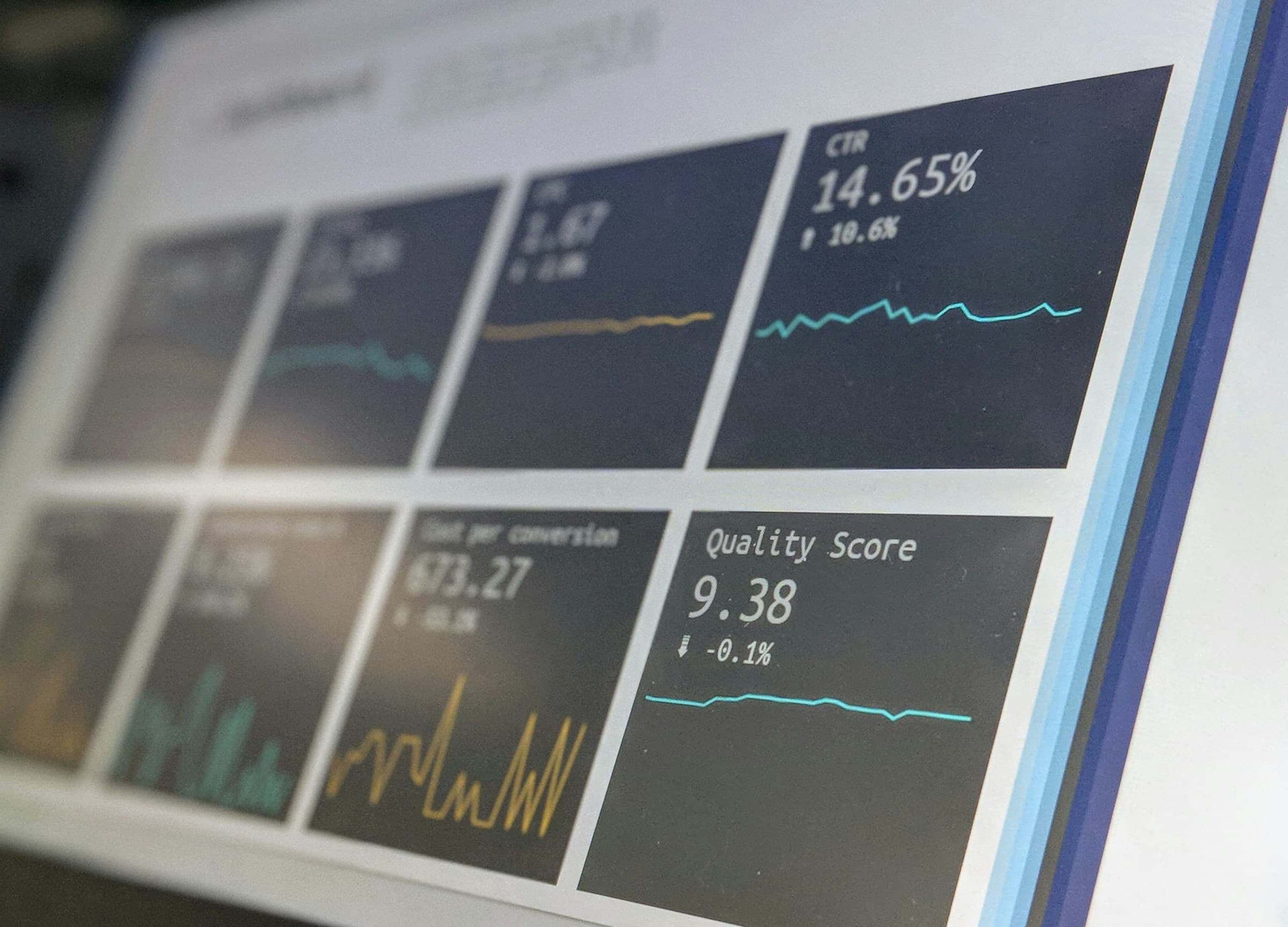
Pulling the frameworks above together, a well-built index tracks four things per employee, rolled up per team and per organization:
- Frequency and depth of use in their actual daily tools, not a separate training environment
- Output quality, meaning whether the work AI helped produce holds up to review
- Judgment and critical thinking, meaning whether they know when to override or double-check the model
- Contribution back to the organization, meaning whether their good prompts and use cases get captured and reused, or stay locked in one inbox
That last point matters more than it sounds. GOV.UK's AI Skills Adoption Pathway explicitly links organizational adoption stage to individual skill needs, meaning a mastery index isn't static. What counts as "advanced" mastery in month one of a rollout is baseline competence by month twelve, so the rubric has to move with the organization.
How Raison Builds a Mastery Index Per Employee and Team

This is the specific gap Raison was built to close. Rather than reporting seat activations, Raison gives every employee and every team a mastery index, built from three connected pieces:
- Socrates delivers bite-sized AI lessons and knowledge checks directly inside Microsoft Teams or Slack, so the index is built from continuous, low-friction checks in the flow of work, not a single test that goes stale after week one.
- The AI Forum centralizes the best prompts and use cases your employees are already building, so the index captures not just individual competence but whether good practice is actually spreading across the team instead of staying siloed with one person.
- Guidelines & Governance gives L&D and IT a framework for scaling what's working safely, which is also where the judgment and governance-awareness dimension of the index comes from, not just usage volume.
Together, that's the difference between knowing who has a license and knowing who has actually built the skill, per employee and rolled up per team, so leaders can see exactly where to focus training instead of guessing from adoption dashboards.
If you want to see what a mastery index looks like for your own organization, book a corporate demo and we'll walk through how it's built from your team's real usage, not a one-time quiz.
Sources referenced: BCG, "Where's the Value in AI?" (2024), CFTE AI Proficiency Framework (2026), HiBob AI Skills 2026 Report, HiBob AI Skills Assessment Tool, GOV.UK AI Skills Tools Package