Why a 2-Day AI Seminar Is Already Outdated by the Time It Ends
A 2-day AI seminar cannot keep pace with rapidly evolving tools, changing skills, and the way employees actually learn. Discover why continuous, embedded AI training is the future of workforce AI adoption.

Your company just spent two days and a real budget line getting a room full of employees "AI trained." By the time everyone is back at their desks, the tools they were trained on have already changed. This isn't a scheduling problem. It's a structural mismatch between how AI evolves and how most corporate training is still built.
At Raison, we help organisations bring AI mastery to 100% of their teams, not just the handful of employees who would have figured it out anyway. Getting there starts with understanding why the seminar model was never going to work for AI in the first place.
The math doesn't work anymore
Corporate training has always assumed a gap between "learn it" and "forget it." What's changed is how fast that gap opens, and how fast the subject matter itself moves.
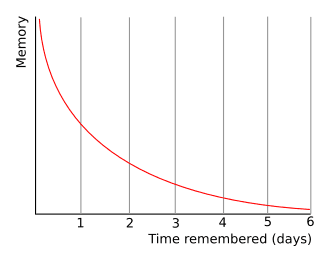
Employees forget most of what they learn, fast. The Ebbinghaus forgetting curve, one of the most consistently replicated findings in learning science, shows that people lose roughly half of new information within an hour, and up to 90 percent within a week if there's no reinforcement, according to research summarized by Go1. A 2-day seminar has no mechanism built in to fight that curve. It's a single event, not a system.
Professional skills are decaying faster too. Salesforce's own research on L&D points out that the half-life of a professional skill, meaning the time it takes for half of it to become outdated, has shrunk dramatically as AI adoption accelerates inside companies. Training built for a 10-to-15-year skill half-life is now being deployed against a skill set that can turn over in a fraction of that time.
AI tools themselves ship on a weekly cycle, not a yearly one. Tracking data on frontier model releases from providers like OpenAI, Anthropic, and Google shows new models or major updates arriving roughly every few weeks across the industry, not once a year. A seminar curriculum written in January covering "how to prompt ChatGPT" is describing a product that may already behave differently by the time the slides are presented.
Stack those three curves on top of each other, forgetting curve, skill half-life, and product release cadence, and a 2-day seminar isn't just imperfect. It's structurally unable to keep pace with what it's supposed to teach.
Why this hits AI training harder than any other kind of training
Compliance training or onboarding can survive being a one-time event because the subject matter is relatively stable. AI training can't, for a simple reason: the tools people are being trained on are not the same tools six months later.
This is the exact gap Raison was built around. Our internal research lines up with a pattern we hear from almost every HR and L&D leader we talk to: 97 percent of business leaders believe AI will transform their company, yet only 4 percent are seeing substantial value from it today. That gap isn't a tooling problem. It's what happens when training is treated as an event instead of an ongoing habit. A completed seminar tells you who showed up, not who can actually use AI well six weeks later.
What continuous AI mastery looks like instead

If a single event can't keep up with a moving target, the training has to move with it. In practice, that means three things need to be true at once, and they map directly to how we've built Raison for corporate teams.
Training has to live inside the tools people already use, not a separate destination. Micro-trainings and knowledge checks delivered by Socrates, our AI coach, run directly inside Microsoft Teams or Slack. Nobody blocks out a day or logs into a separate LMS. The training shows up where the work already happens, in short sessions that can be updated as the underlying AI tools change, not once a year.
Good practice has to be centralized instead of trapped with one employee. One of the quiet failures of the seminar model is that the employees who do figure AI out well never share what they've learned in a structured way. Raison's AI Forum exists specifically to fix this: it centralizes the best prompts and agents your own employees are already building, so that knowledge compounds across the company instead of leaving with whoever discovered it.
Adoption has to be governed, not just encouraged. Growth without structure is how you end up with inconsistent, risky AI use across departments. Guidelines & Governance is the layer that lets you scale the use cases that are actually working, safely and consistently, instead of hoping good habits spread on their own.
None of this replaces judgment with automation. The goal, as we put it on our FAQ page, is mastery, not blind trust in whatever a model outputs. Employees who go through continuous, in-workflow training keep their critical thinking intact, they just get faster and more consistent at applying it.
The real question to ask before your next AI training budget
Before booking another seminar, it's worth asking a more useful question than "did people attend." Ask instead: six weeks from now, will anyone be able to tell you who on the team actually mastered AI, versus who just sat through a session?
If the honest answer is no, the training format is the problem, not the employees. A 2-day seminar was never going to survive contact with a subject that changes every few weeks. Continuous, embedded, measurable training is the only model built for that pace.
If you want to see what that looks like for your own team, book a corporate demo and we'll walk through it together.
Sources referenced: Go1, "Overcome the Forgetting Curve in Corporate Training"; Salesforce, "The Half-Life of AI Skills Is Shrinking"; LMMarketCap, AI Model Release Tracker.